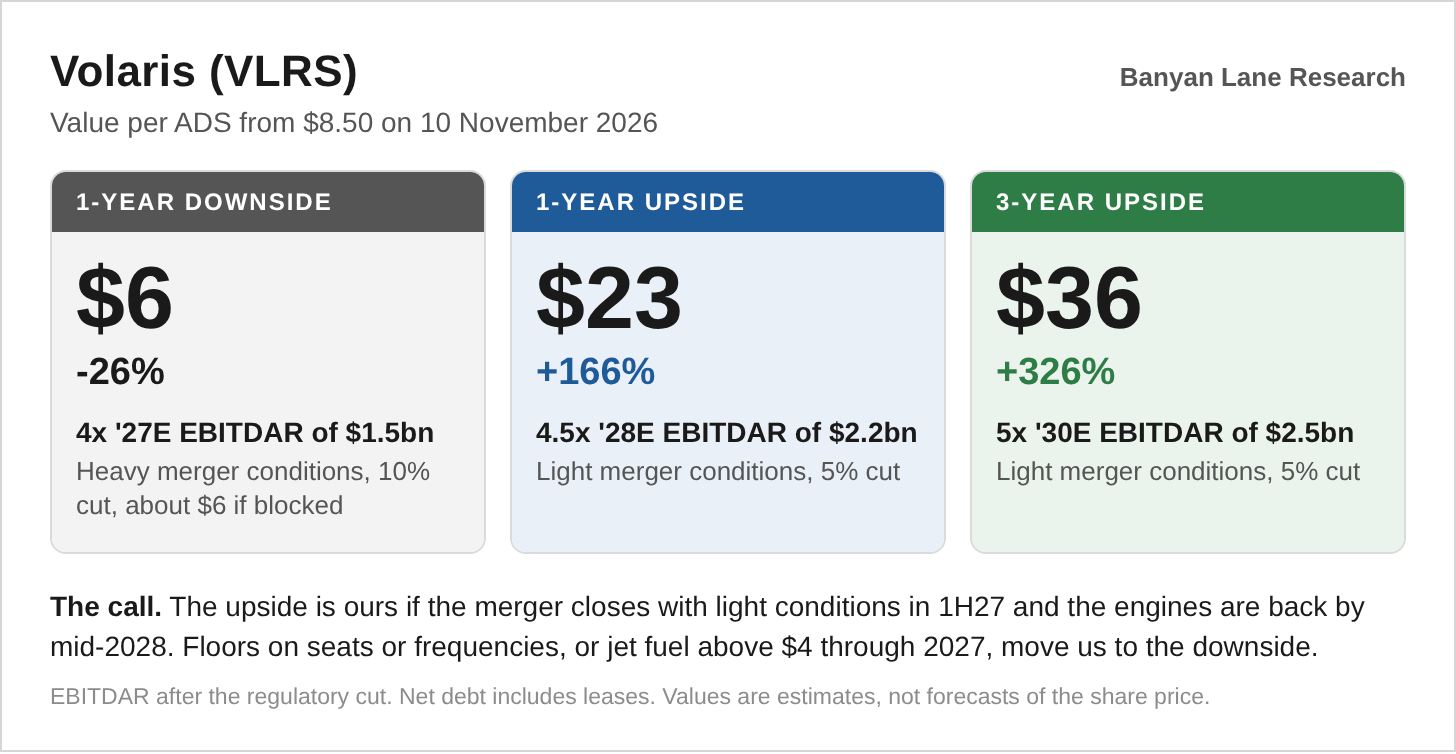
Cheap on depressed earnings… 4.3x LTM EBITDAR, earned with $4.10 fuel and 50+ jets grounded, about 5.6x without engine-maker payments that end
Oil past its peak… jet fuel of $3.40 a gallon in 2027, $2.90 in 2028 and $2.70 in 2030 vs $4.10 last quarter, no Hormuz deal signed yet
Regulator… 5% of group EBITDAR per step of merger conditions, light conditions expected in 1H’27
What breaks it… fuel above $4 through 2027, a blocked deal plus a fare war, a second FAA downgrade
Seven years, nine shocks and recoveries
Since 2019, Volaris has been through nine regimes. Every bad one had an outside cause. Every good one grew from a decision management made during the bad one before it.
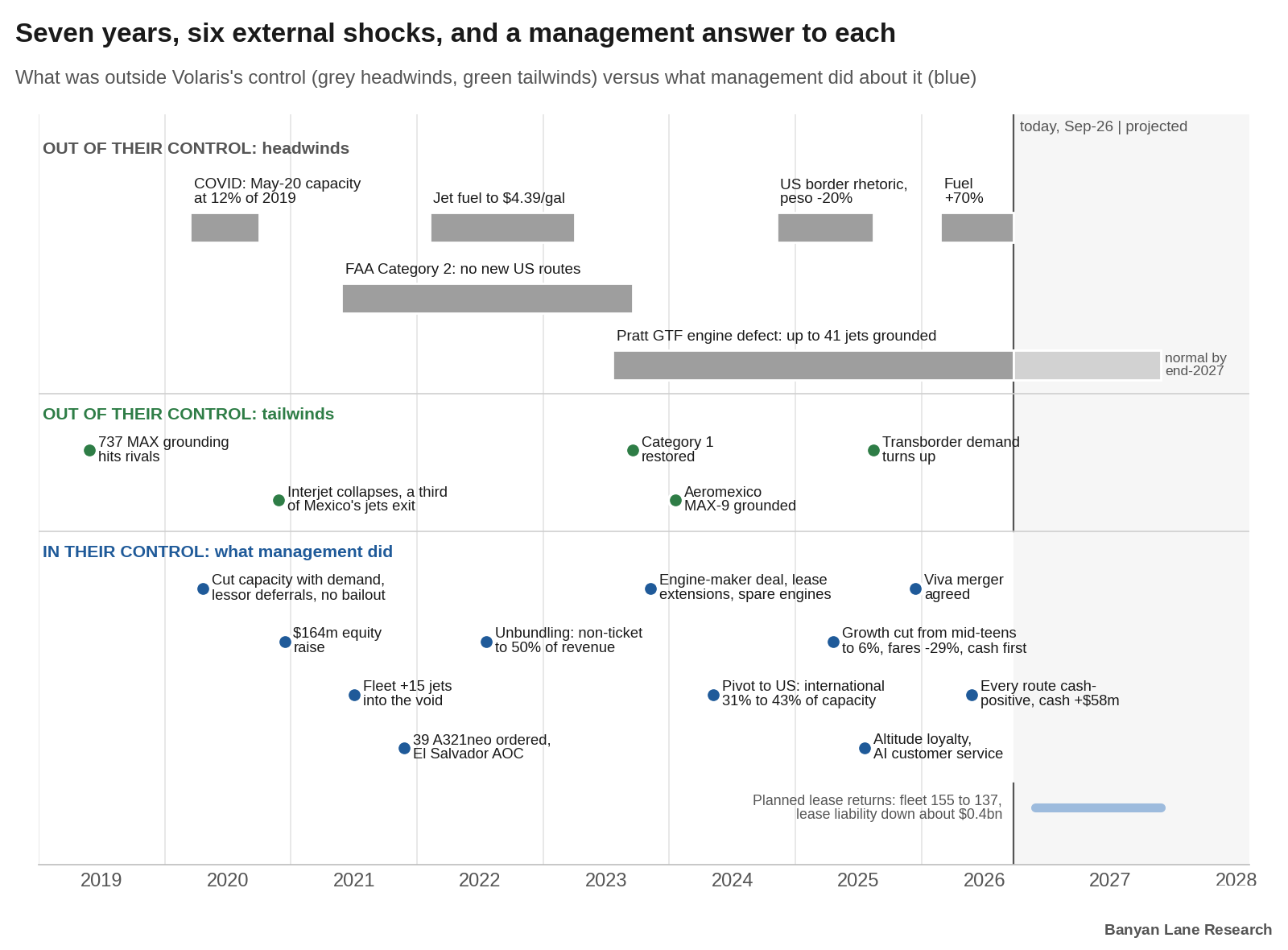
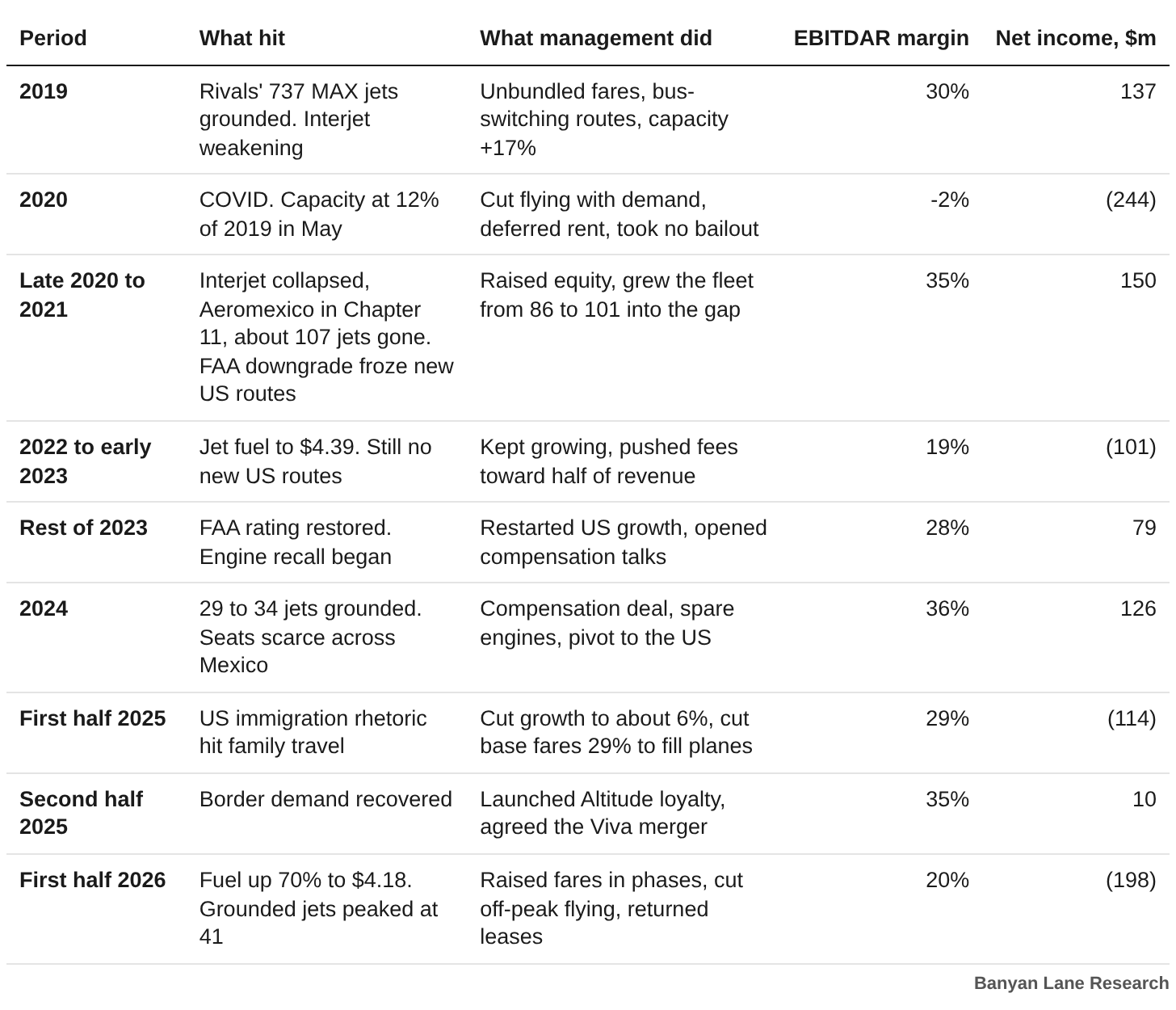
They kept the fleet through COVID and were first back when Interjet collapsed
They built US demand while the FAA blocked new routes, then moved jets to the border when it lifted
They won compensation and spare engines in the engine recall, and earned record margins on a smaller fleet in 2024
The third quarter of 2026, a 25% margin at $4.10 fuel, looks like the first step out of the ninth regime
Volaris in brief
One of Mexico’s two largest airlines and among the lowest-cost in the Americas, flying since 2006, listed in 2013
$3.5bn of revenue and about 33m passengers a year on 244 routes
154 Airbus A320-family jets, 71% new-engine, 114 more on order through 2032
Fees are 53% of revenue and about 85% of sales are direct [T2/T3]
Three pulls on demand cheaper than the bus in a country with more than 3bn intercity bus trips and no passenger rail, a bridge to 39m people of Mexican heritage in the US, and fees that holds up when fares fall
Almost every jet is leased and more than 70% of costs are variable or semi-fixed, so it can shrink fast in a shock
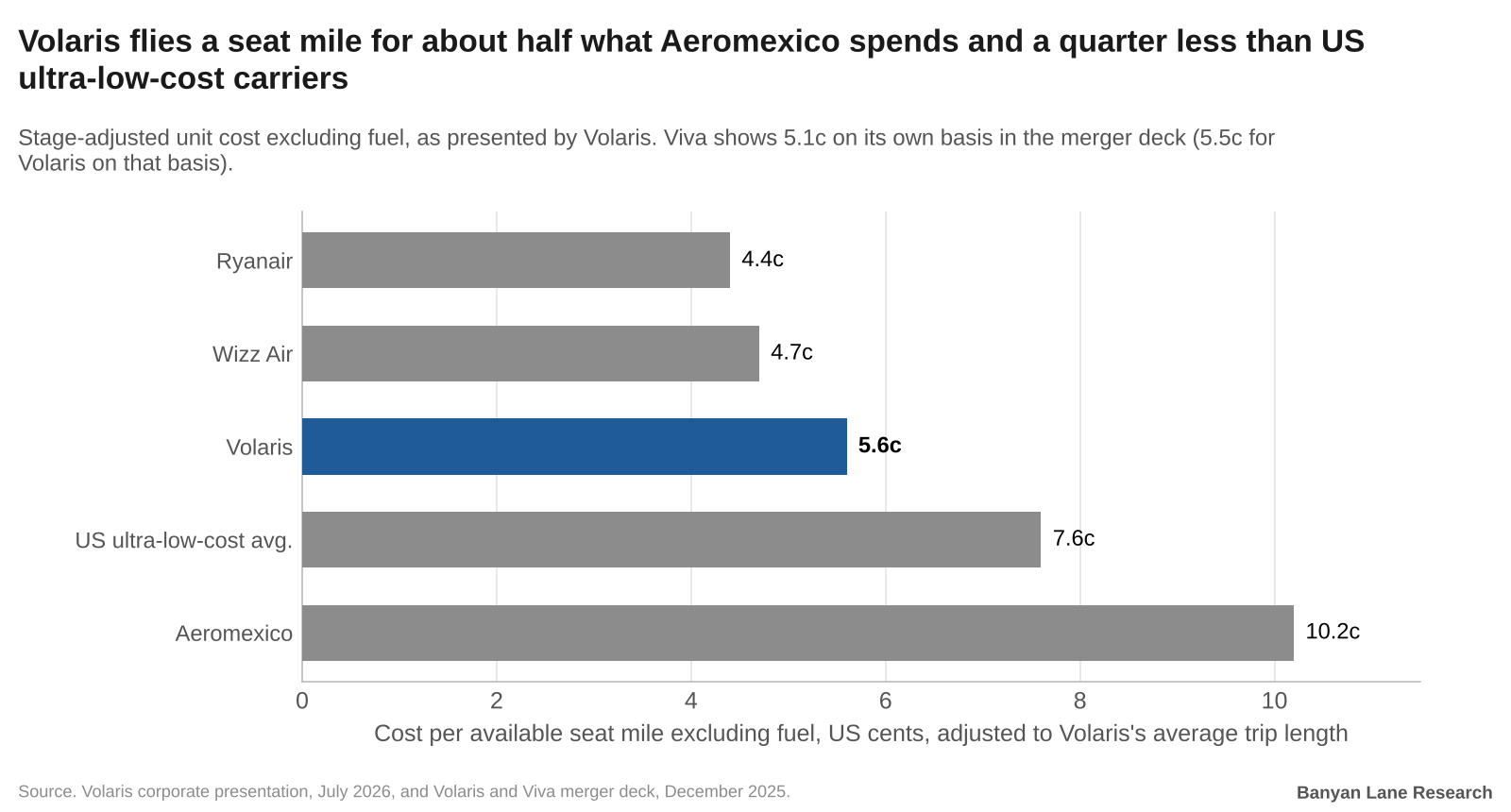
Unit cost ex fuel of 5.6 cents, against 7.6 for US low-cost peers and 10.2 for Aeromexico
Mexico’s air market
Mexicans take 0.5 air trips a year each, against 1.3 in Turkey
Domestic passengers rose from 22m in 2006 to 63.5m in 2025, but 2025 was no higher than 2023
Interjet, with 20% of passengers, collapsed in 2020, Aeromexico slipped from 28% to 25%, state-run Mexicana carries under 1%
What is left is two low-cost airlines, Volaris had 34% of domestic passengers in 2025, Viva 40%
More than 50 grounded jets return by 2028, alone, the two would add domestic seats 7% to 8% a year against demand growth near 3%
US airlines’ share of US-Mexico passengers fell to 66% in 2025, that is where spare jets can go
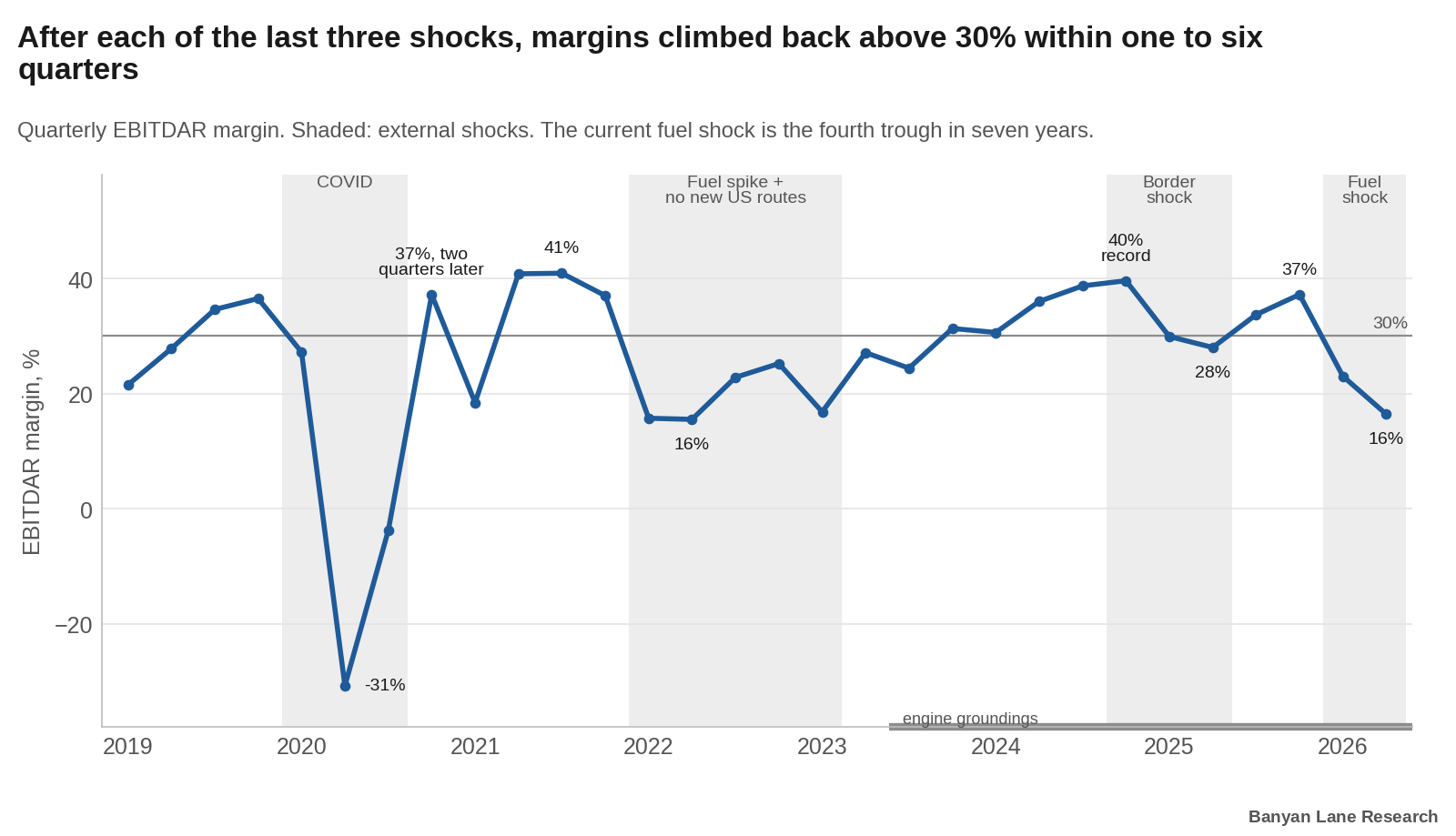
Margins snap back after shocks
Volaris earns its best margins coming out of a crisis. When a shock takes seats out of the market, the lowest-cost airline fills the gap at better fares. It happened in 2021 and again in 2024.
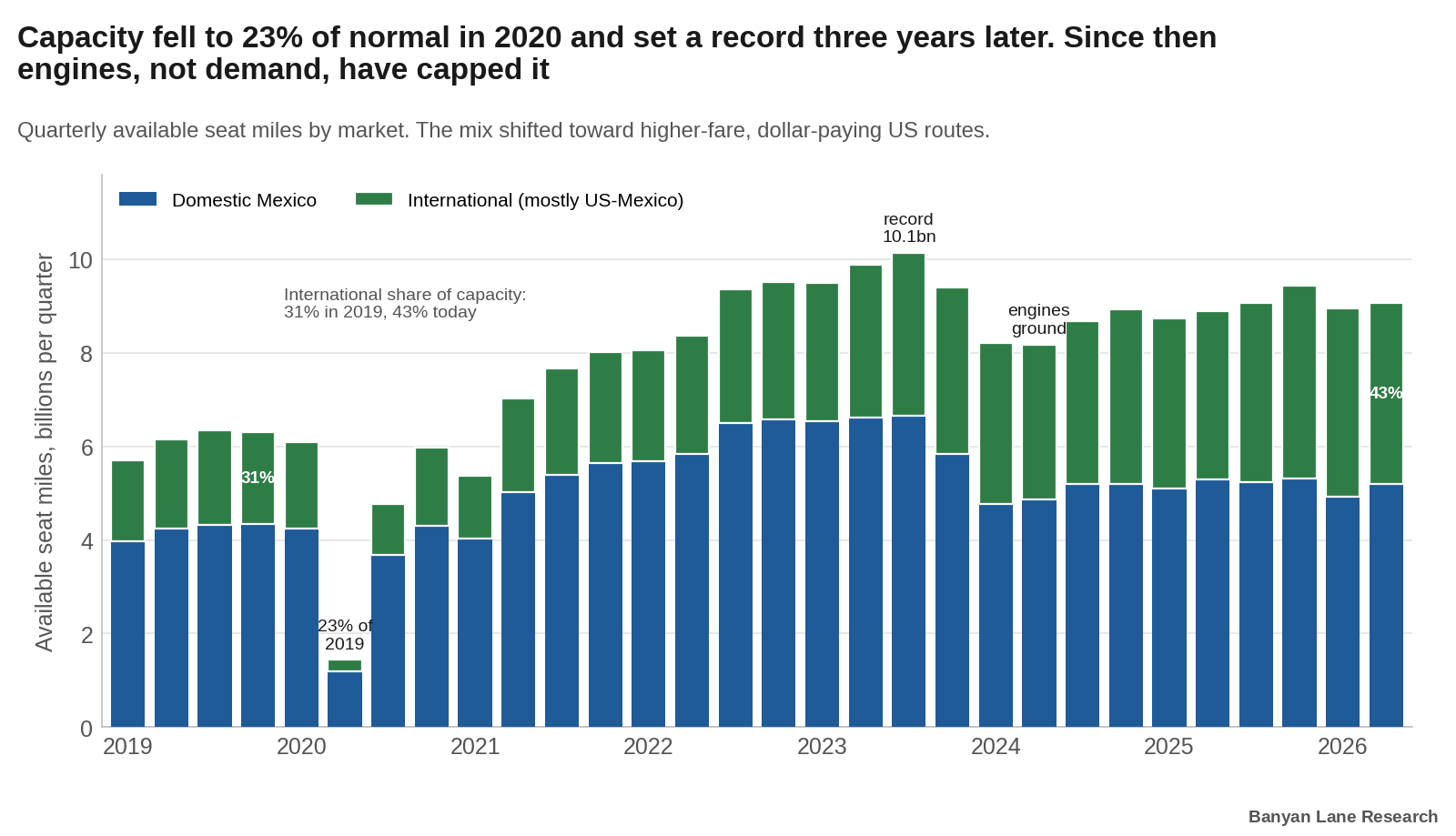
International flying rose from 31% to 43% of seat miles, more of the network now earns dollar fares
What they fixed under the surface
Fees carry the revenue
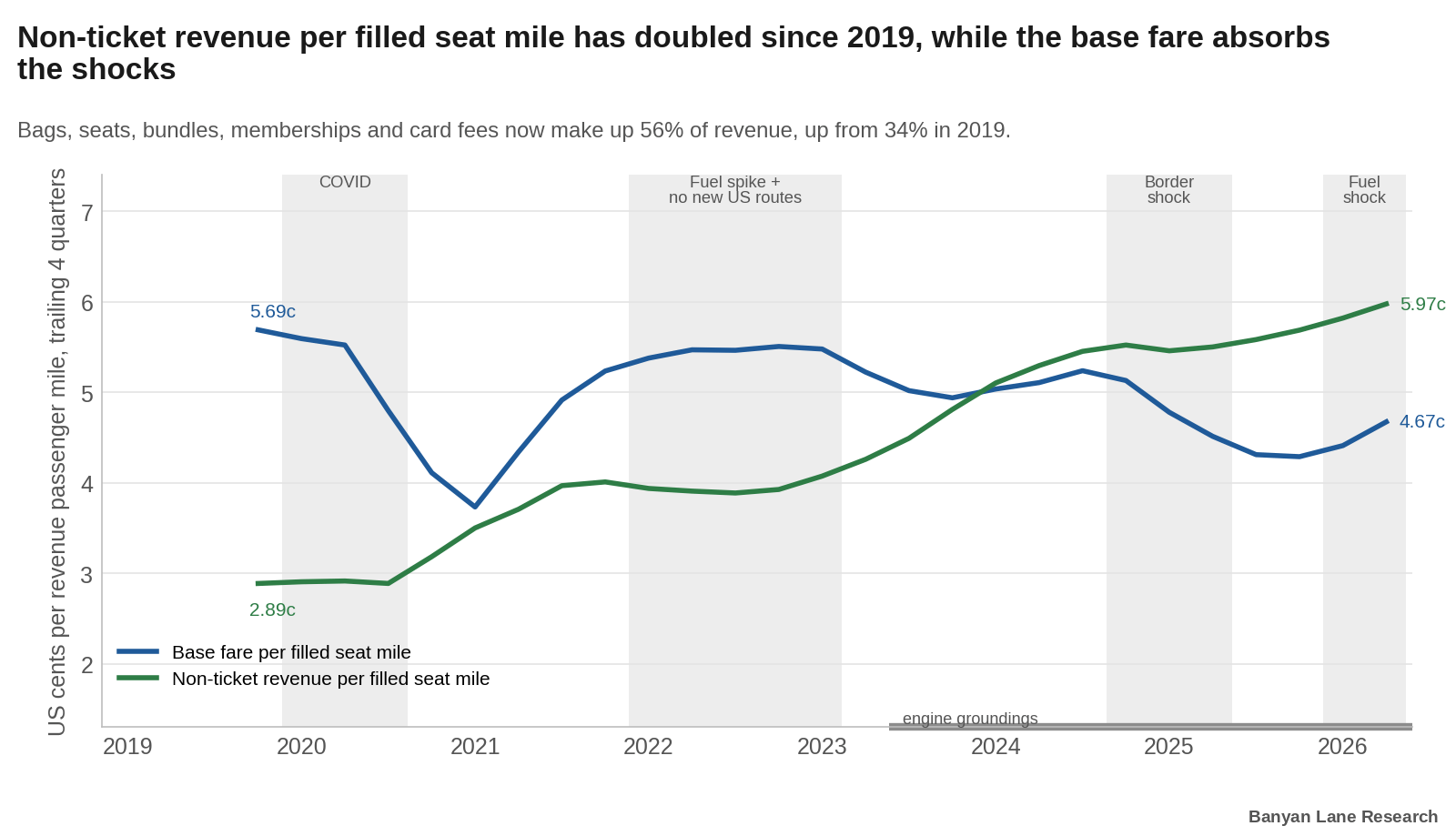
Fees for bags, seats, bundles, membership and the co-brand card were a third of revenue in 2019, they were 53% to 56% in 2026
Per filled seat mile, fees rose from 2.89 to 5.97 cents, the base fare fell from 5.69 to 4.67 cents
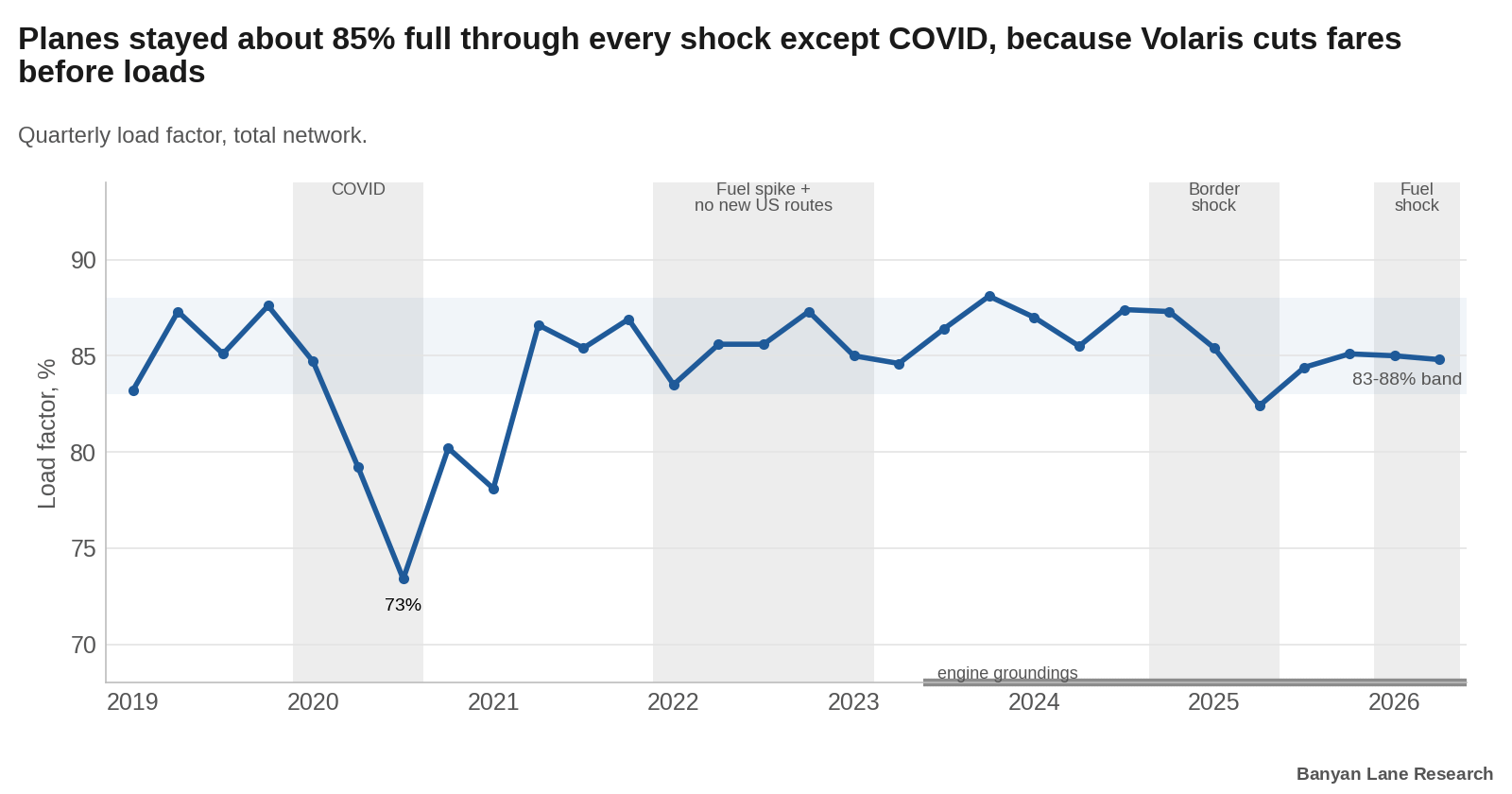
In a shock Volaris cuts the fare to fill planes and the fees hold