


Starling Oncology (STLN)
fka The Oncology Institute (TOI)
Last: $6.75 Mkt cap: $805mm fully diluted
1.0x ‘27 CONS Sales / 27x EBITDA (b/e margins in ‘26)
The business in short…
Largest value-based oncology platform in the U.S.
Hybrid care delivery model (employed physician group and network of independent providers) plus large specialty pharmacy (60% of revenue)
Operate across five states covering 2.1m lives in CA, FL, NV, AZ, OR
Fixed monthly payment per covered life from health plans and medical groups, then owns that population’s Part B cancer bill
2.1m lives under value-based contracts at 2Q26, California, Florida, Nevada, Arizona, Oregon
116 employed oncologists and clinicians across 80 sites, 300+ independent doctors under contract, 17 markets
Buys 95% of the drugs it administers via owned specialty pharmacy
FY2026 guide to revenue $650–670mm, first year of positive adjusted EBITDA as a public company
2027 guide to capitated revenue doubling to $300mm on contracts mostly already signed
Note: new CEO in place for 3yrs, meaningful turnaround corrected meaningful mis-steps that will not be covered here but are widely covered elsewhere
Personal note: after 10 years on the buy-side, I spent a year helping restructure a large direct primary care business (DPC), also value-based care, with ~15k members and an in-house pharmacy…. I have seen the explosive growth firsthand when VBC models manage to engage and align incentives for large pools of patients
Why oncology needs value-based care
Fee-for-service pays a doctor for each thing done. Value-based care (VBC) pays for an outcome, or in this case a population, and lets the provider keep what it saves. In oncology, this means capitation (charging per head) on the Part B benefit:
Plan pays a fixed dollar amount per member per month (PMPM), whether or not that member has cancer
Provider takes responsibility for the doctor visits and the infused drugs of everyone who does
Provider keeps the difference between the check and the cost, and eats the difference if cost is higher
Pills taken at home (Part D), hospital stays (Part A), CAR-T sit outside the risk
The reason this exists at all is that oncology is a massively inflating portion of risk pools with long tail outcomes that are difficult to manage… 10% of some pools with $300bn of annual spend… fee-for-service has failed here.
Why oncology is such a mess
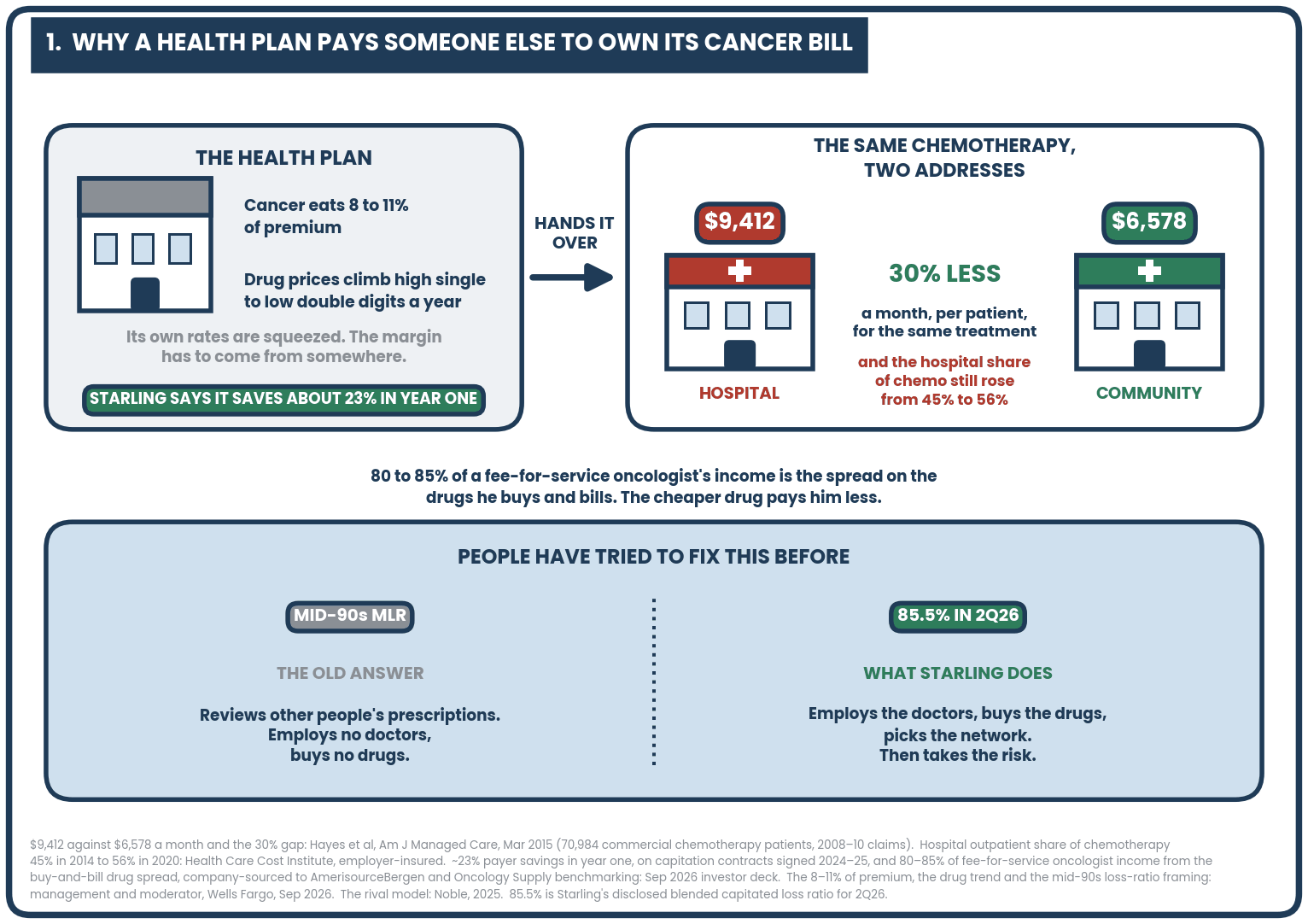
Drug prices are key part of problem. US oncology drug spend ran ~$145bn in 2024, projected $180bn by 2028. Biologics were 79% of Part B drug spending by 2021 and 89% of its growth. CEO Virnich at Wells Fargo said “oncology is the most expensive specialty that payers have to deal with, all driven by the costs of the drugs.”
Everyone in the chain is paid cost-plus. A community oncologist buys the drug, administers it, bills at average sales price plus 6%, sequestered to ~4.3%. Between 80 and 85% of a fee-for-service oncologist’s income is that spread. The cheaper drug pays him less. Nobody in the delivery chain is paid to spend less. Incentives simply are not aligned.
The same infusion costs 86% more in a hospital. EBRI, 2016 commercial claims, 18,195 patients on the top 37 infused cancer drugs saw that hospital outpatients paid 86% more per unit than physician offices, $21,881 a patient against $13,128.
Hospital share has gone up, not down. Physician offices fell from 63% of Part B drug spending in 2008 to 53% in 2021. Hospital outpatient rose 23% to 41%. The mechanism was 340B where hospitals buy at statutory discounts, bill at ordinary rates, and in 2022 earned a margin on cancer drugs equal to 45% of reimbursement… $570,161 per medical oncologist against $64,236 for other specialists. That number is why hospitals bought the practice down the street. Community Oncology Alliance count since 2008: 435 clinics closed, 722 acquired by hospitals, 203 merged. To be fair, though, you cannot blame them. Reimbursements are being squeezed and they’re looking for anywhere they can make margin.
Payers being squeezed from both sides. Medicare Advantage (MA) cut rates the last two years while acuity and utilization rose. Oncology runs 8 to 11% of MA premium. The legacy fix was a benefit manager reviewing prescriptions, and the loss ratios quoted for that model sit in the mid-nineties.
Medicare itself tried three times and lost money each time. The Oncology Care Model, 2016–2022, had 202 practices… real gross savings, fully offset by incentive payment and net costs to Medicare. Oncology Care First never launched. Enhancing Oncology Model 2023 onward saw uptake collapse from 122 to 44 practices, so terms had to be sweetened, first evaluation still lost $13.2MM in six months.
Politics and well-meaning frustrations from all parties aside… there is no systemic fix to this in sight, but multiple parties are at breaking point
Enter VBC
Payers cannot make oncology risk work in-house and have repeatedly failed trying, so they hand the whole benefit to somebody who can
The site-of-care spread is the largest of any specialty
Policy finally pushed the other way… CMS site-neutral payment for drug administration in off-campus hospital depts from 1/1/26, ~60% cut in that setting, $8bn estimated savings over ten years
Every other specialty with this spread saw capital arbitrages it, then the sector consolidated, and in two cases the provider ended up holding the risk
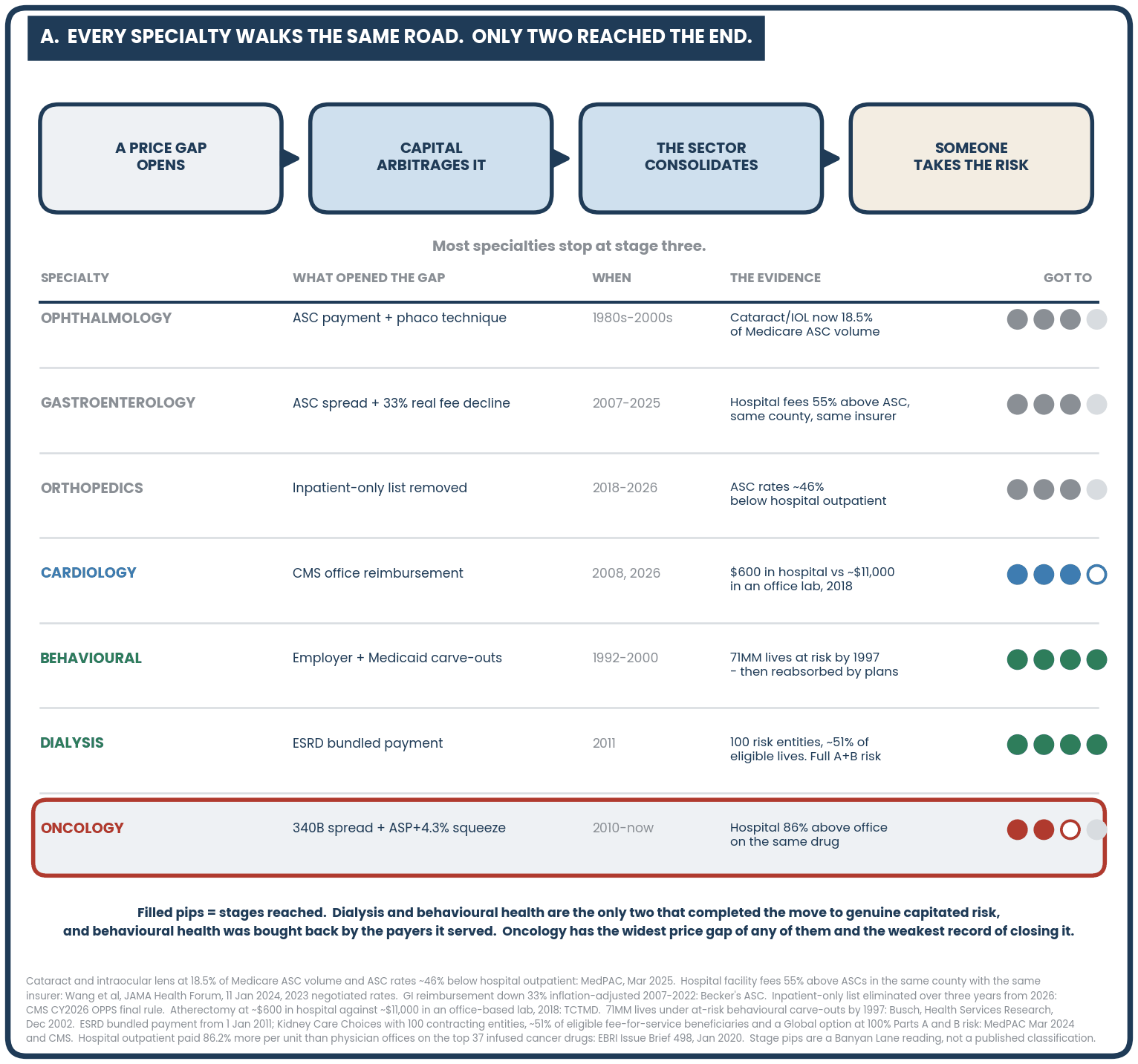
Dialysis is the precedent that completed the move. The ESRD bundle in 2011, then Kidney Care Choices with 100 risk-bearing entities and roughly half of eligible fee-for-service beneficiaries in a full-risk contract today. Behavioral health got to 71MM at-risk lives by 1997, then the plans bought the vendors back. Oncology has the widest price gap of any of them and the weakest record of closing it.
How Starling makes money
1. Health plan pays someone else to own its cancer bill
2. Two kinds of contracts
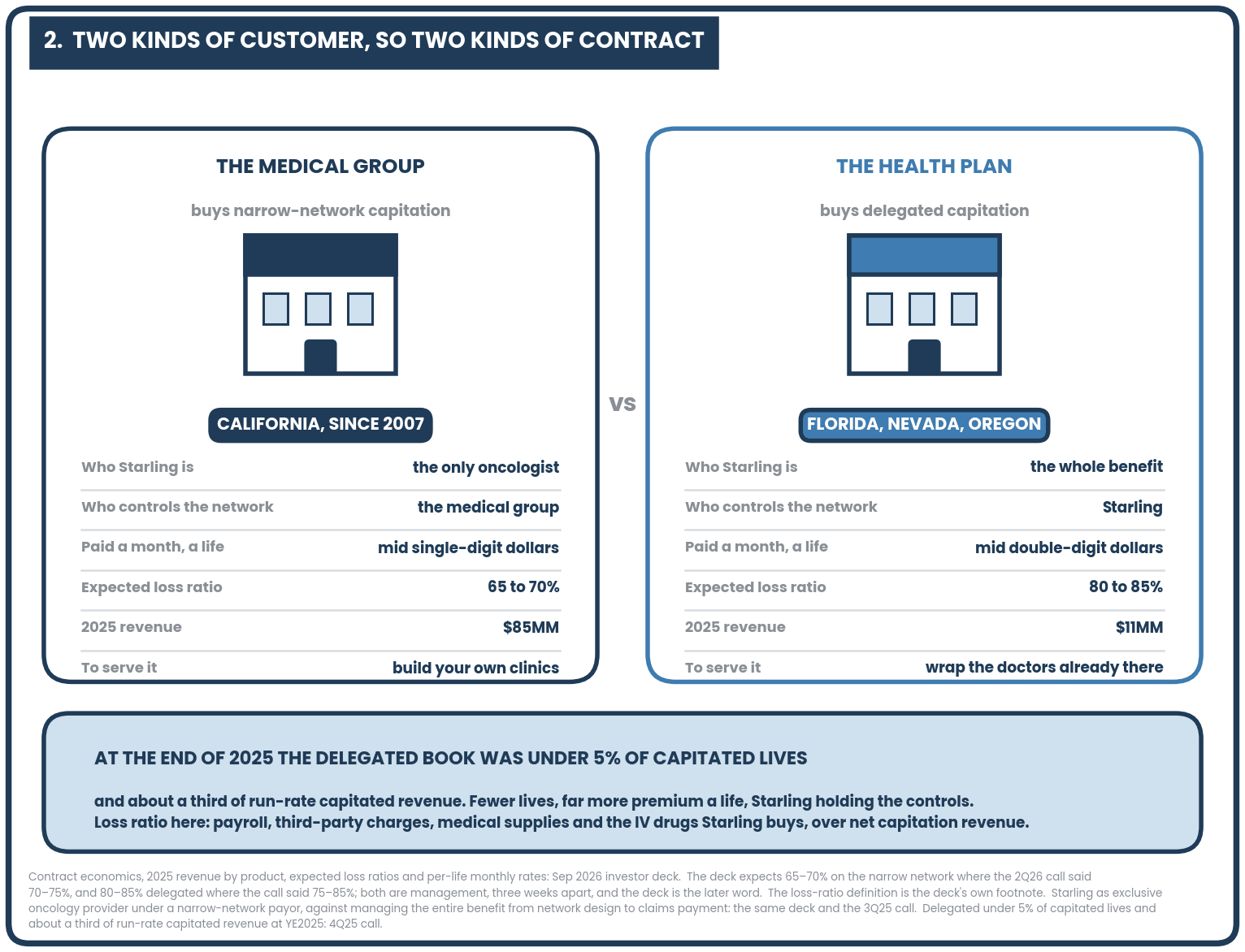
Narrow network, California since 2007… counterparty is a medical group under a Knox-Keene licence, STLN is its only oncologist, group keeps the network and pricing power, mid single-digit dollars a life a month, loss ratio 65–70%, group can swap providers so the rate is capped
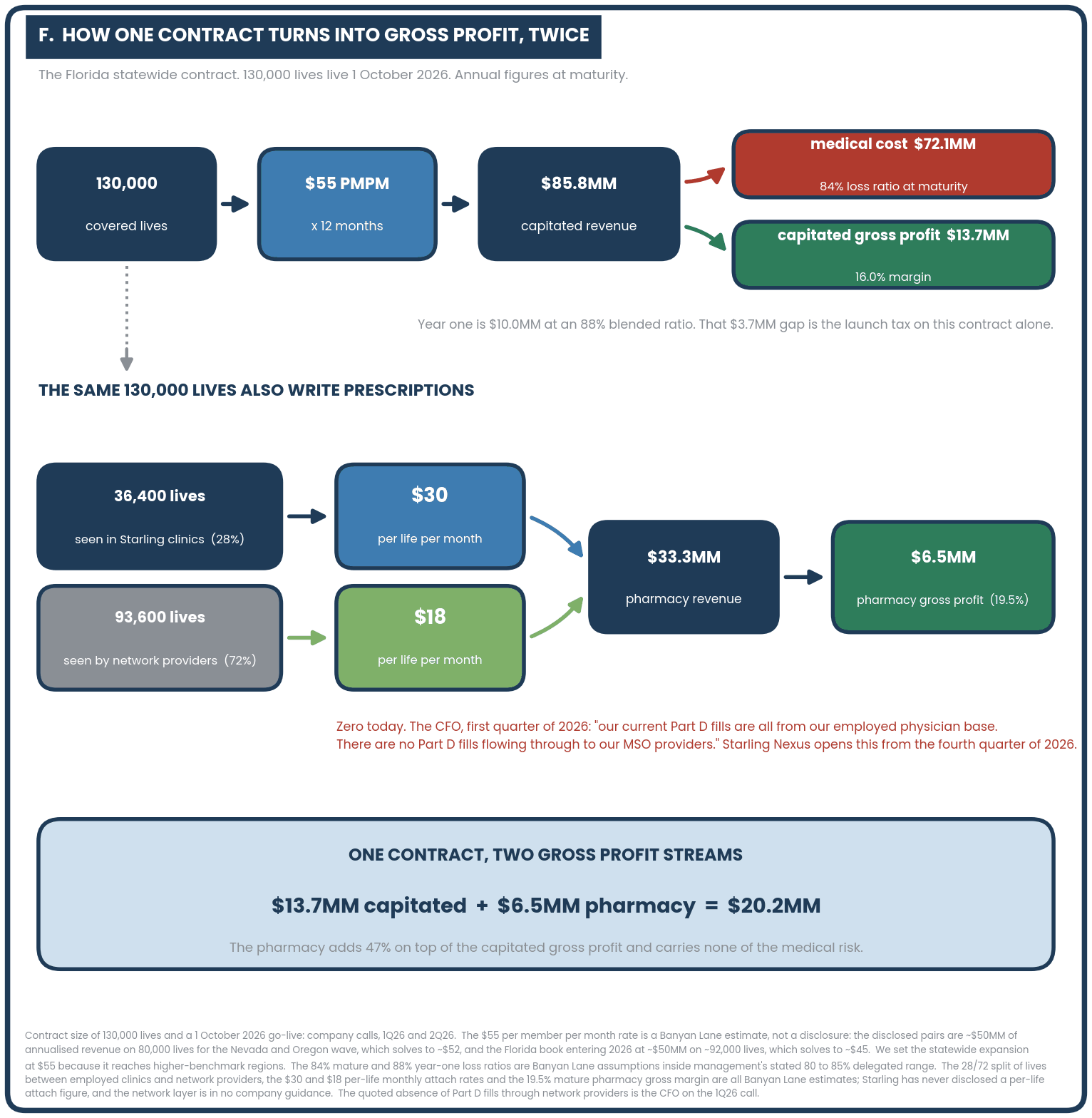
Delegated, the growth product… counterparty is the health plan who “delegates” process to STLN, STLN takes prior auth, claims payment and the network, mid double-digit dollars because STLN bears the risk, up to 10x California, loss ratio matures 80–85%
Why 10x: Florida’s benchmark is hospital-delivered care because this accounts for 40–50% of oncology patients who are served at 150–175% of Starling’s cost, Starling prices against that
2025: old product $85mm, new one $11mm; delegated was under 5% of lives and a third of run-rate revenue at year end
Delegated can launch a market on a contracted network before Starling opens a clinic, so it can go into states where Starling has no footprint
Owned clinics follow the lives, not the other way round
3. Payers hand Starling blocks of lives
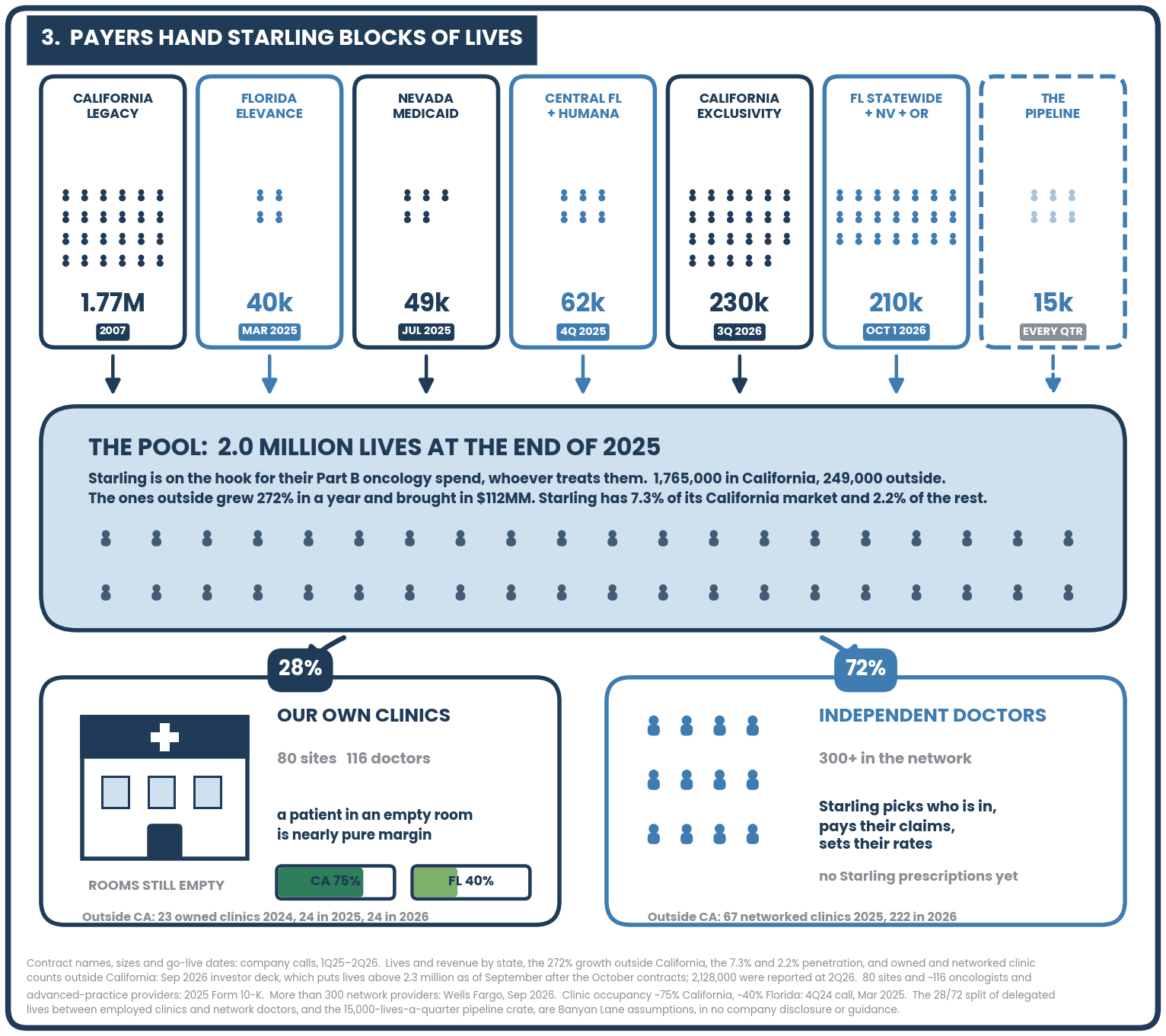
2m lives YE’25 to >2.3m by October as contracts ramp
The trap on this visual… California exclusivity 230,000 lives at ~$2.20 a month, about $6MM a year — lives are not the unit of value, revenue per life is
Clinic cost is fixed; California ~75% full, Florida ~40%; a patient in a lit room is close to pure margin, above the gross-profit line
TAM is LARGE
The company says it is under-penetrated in those five states and that the delegated product applies to basically the other 47 states. Here is the denominator, CMS May 2026 vintage…
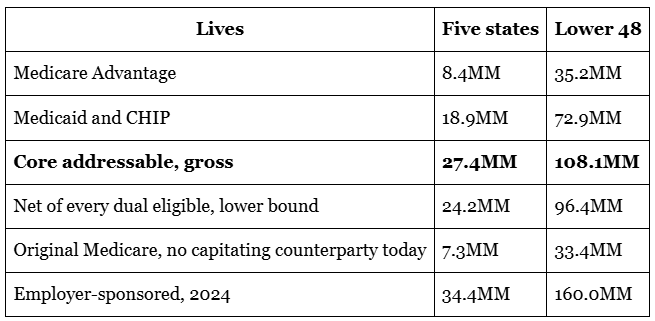
STLN’s 2.1m is 7.7% share in their existing 5 states and just 1.9% of the L48 core
~100 million lives is the potential opportunity for them
~48% of Medicaid lives are children so excluded from oncology capitation;
Evolent, closest comp, carries 6.7m Performance Suite lives across three specialties, or just 6.5% of the pool
No published total exists for US lives under capitated oncology but Evolent plus STLN is under 9m total addressed today - this penetration is now turning and accelerating
Alaska has 2.8% MA penetration and no Medicaid managed care; Hawaii is 0.4MM Medicare — the 48-state framing is right
4. Paid on everyone but spent on the few
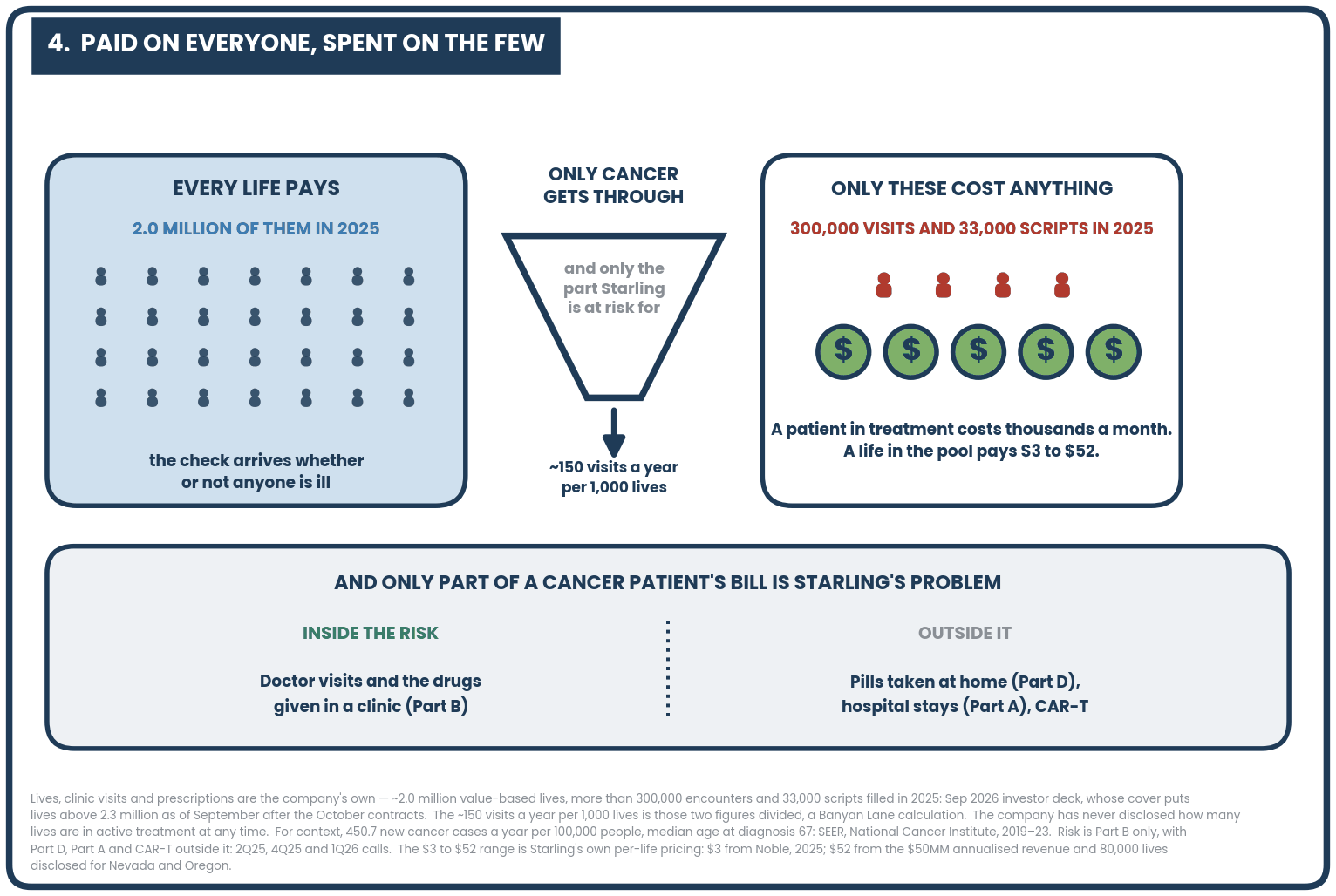
Active-treatment share never disclosed but we carry ~4%
5. Massively underappreciated pharmacy levers
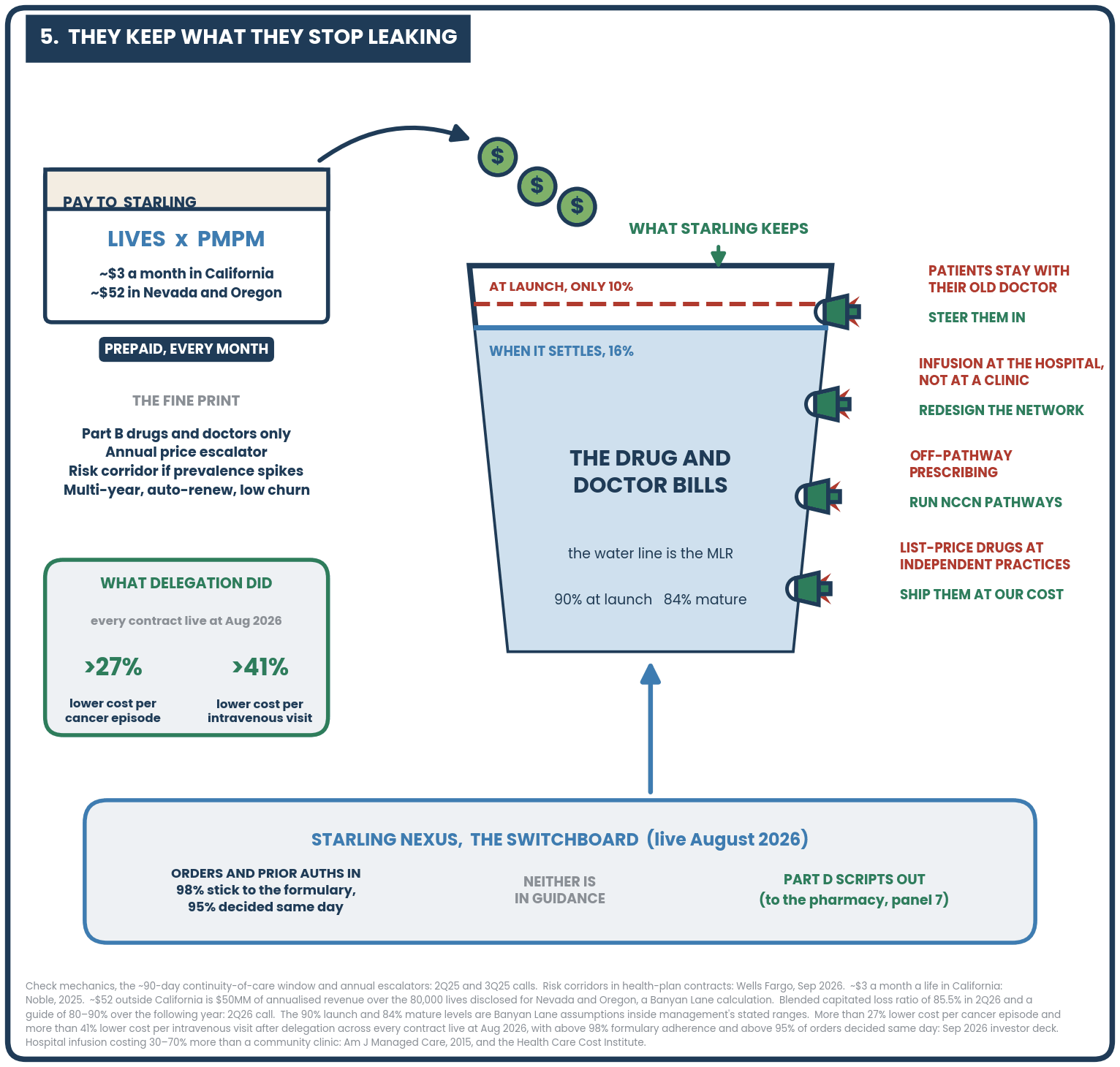
Check arrives first, prepaid, so growth consumes no working capital
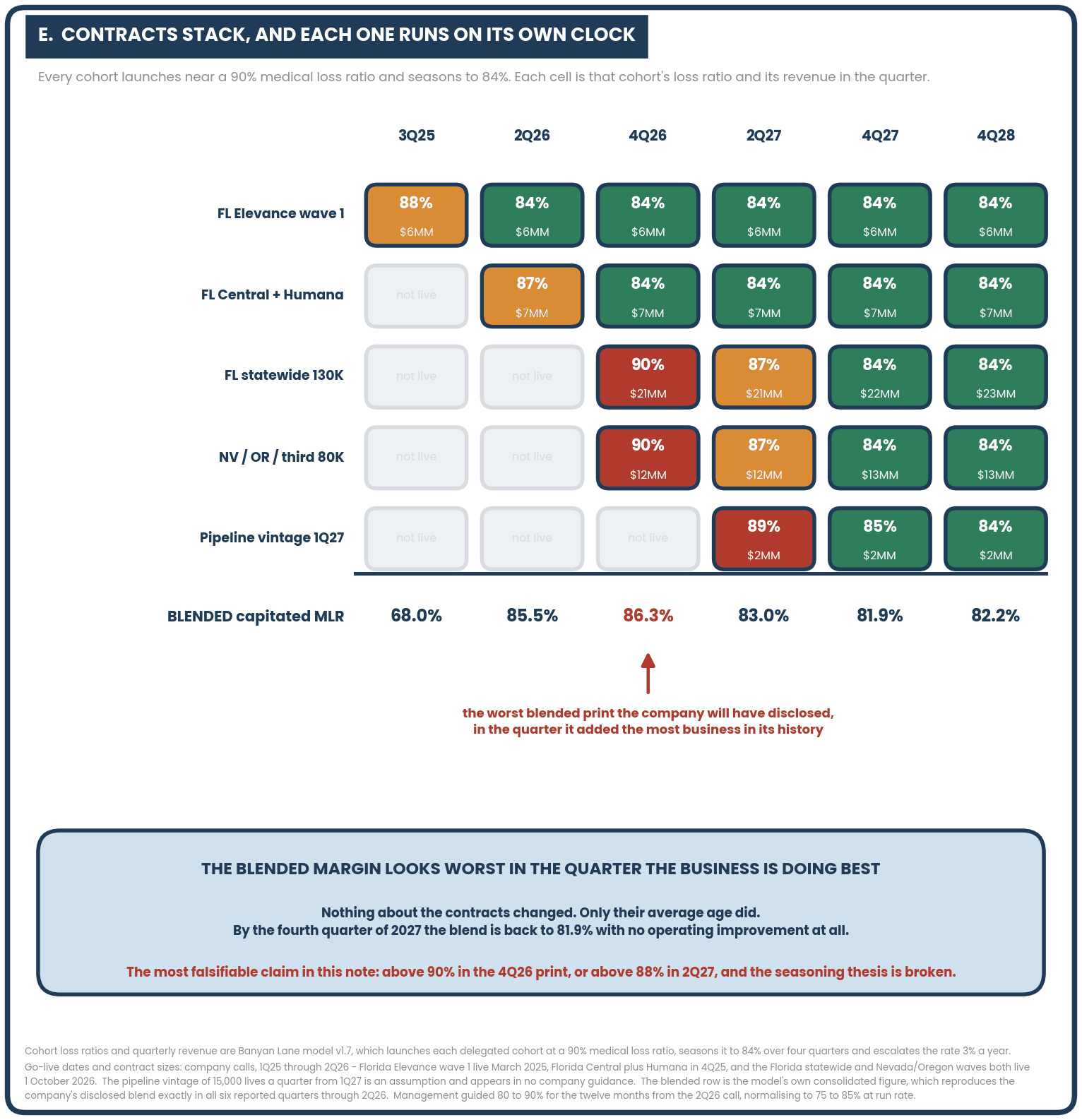
Cohort launches near 90% MLR, staff hired pre-launch, but with 90 day established continuity of care the MLR settles near 84% over a year
4 leaks getting plugged to improve cash flow: out-of-network scripts steered to STLN pharmacy, hospital infusions redirected via network redesign; off-pathway treatments changed to NCCN standard; list-price drugs at independents brought in-house
Company’s own evidence across every delegated contract as of Aug 2026… cost per episode down 27%+, per IV visit down 41%+, 98%+ on formulary, 95%+ decided same day
Risk corridors on every plan contract, and one 2m-life pool, so one bad book does not set the year
6. Every contract seasons on its own clock
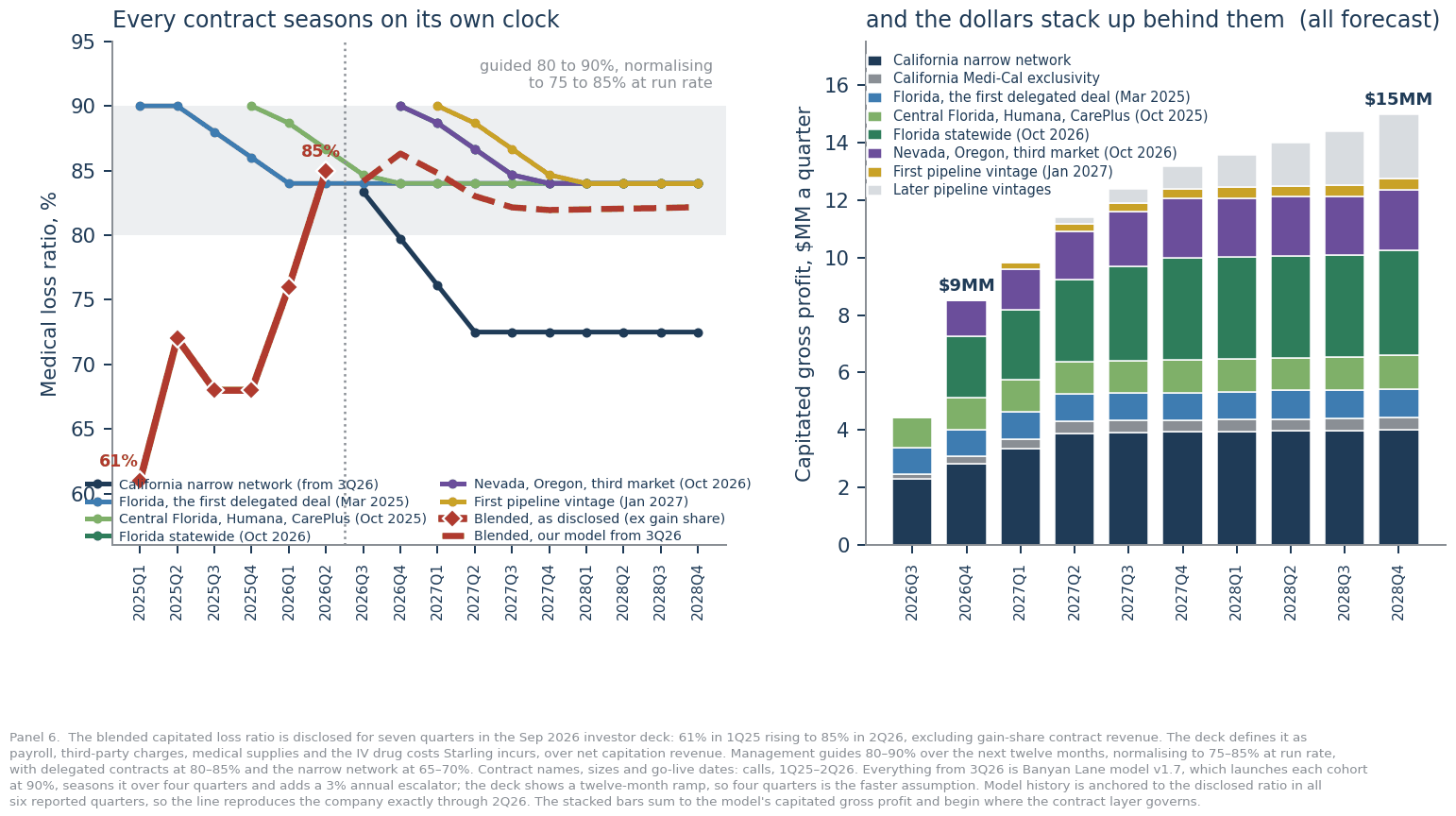
Blended loss ratio now disclosed seven quarters… 61% in 1Q25, 85% by 2Q26 as delegated lives came on
Dollars run opposite to the percentage, so delegated keeps 15–20% of a premium ten times larger
Most important number coming is the Q4’26 MLR… will be worst in company history as contracts ramp and then fall back down toward 82% by 4Q27
7. Pharmacy business underappreciated quality and upside
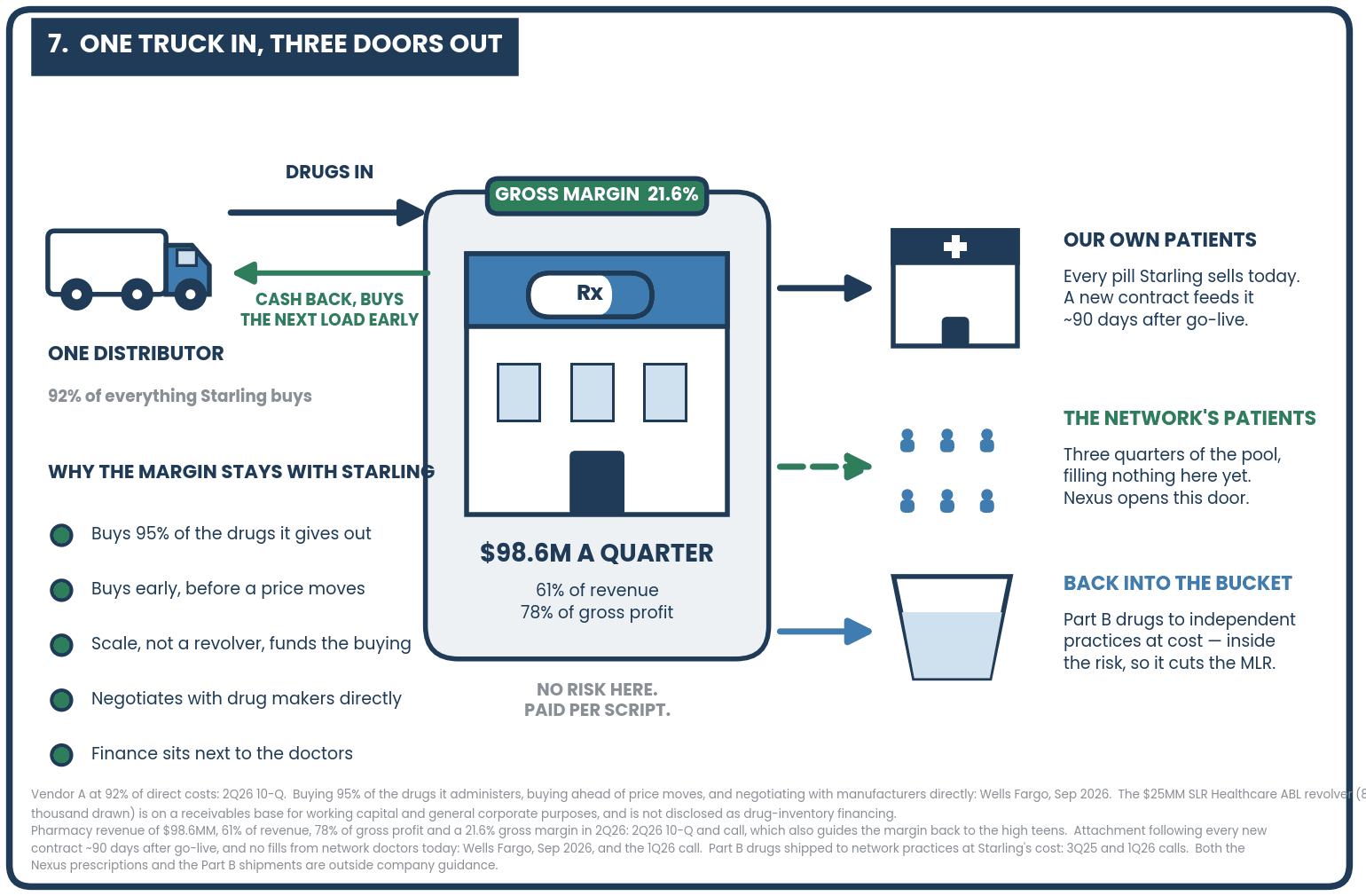
Buys 95% of what it administers and one of the largest oncology drug buyers in the country that is neither a distributor nor a health system
Pharmacy is 61% of revenue and 78% of gross profit in 2Q26, quick collections
Nexus launch is a massive underappreciated lever, we owe more work on this - hugely strategic asset that could change the landscape in the markets they enter
8. Pharmacy grows as pool grows
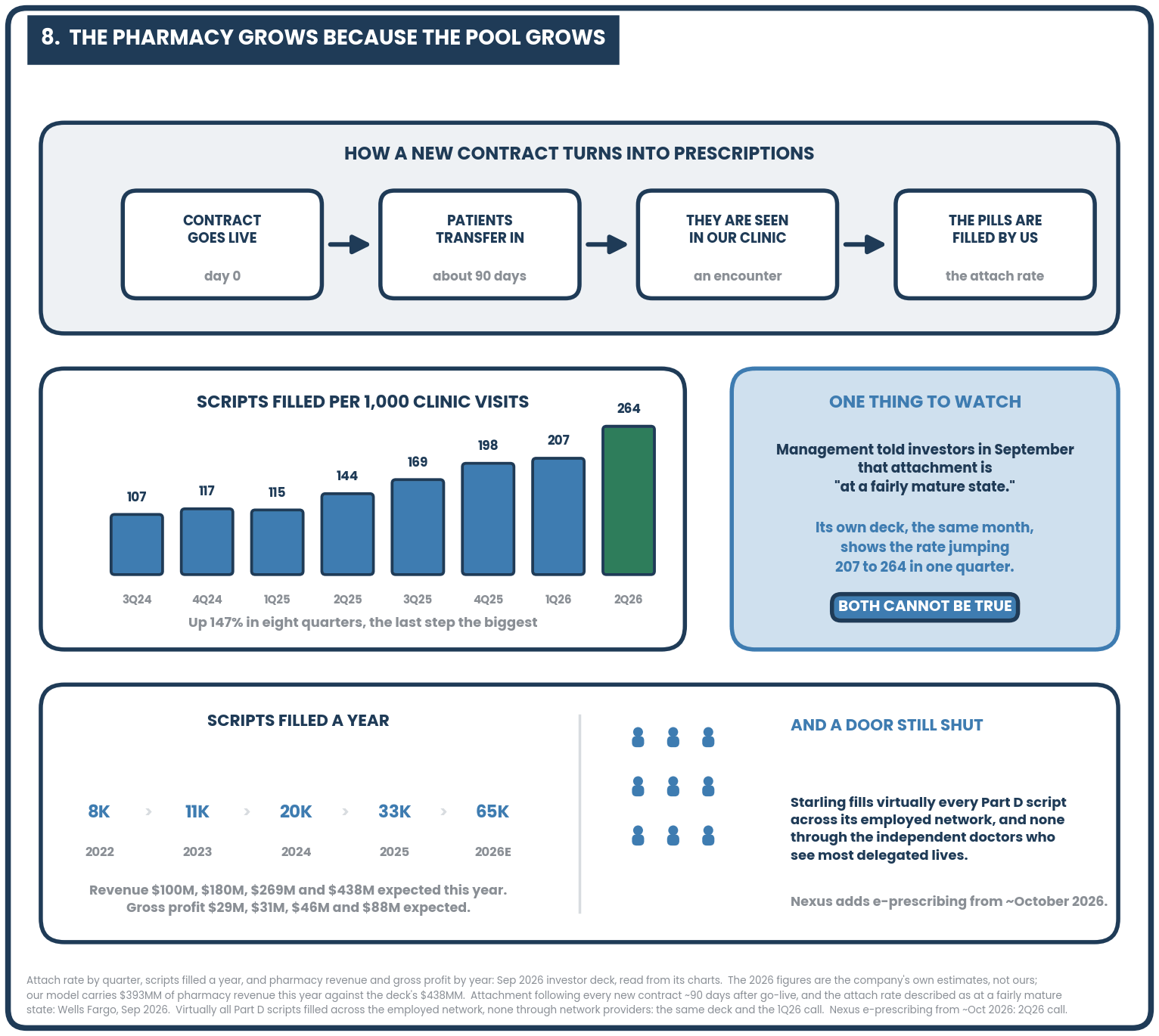
Three structural changes, not a sales push…leakage recaptured (done), pharmacy licenced in California Dec 2023 and Florida late 2025 (so opening Medi-Cal patients previously unservable, done), the network door (not yet)
Asked if opening the network would be all upside to guidance… 100%
9. The piece that is shrinking is the worst piece
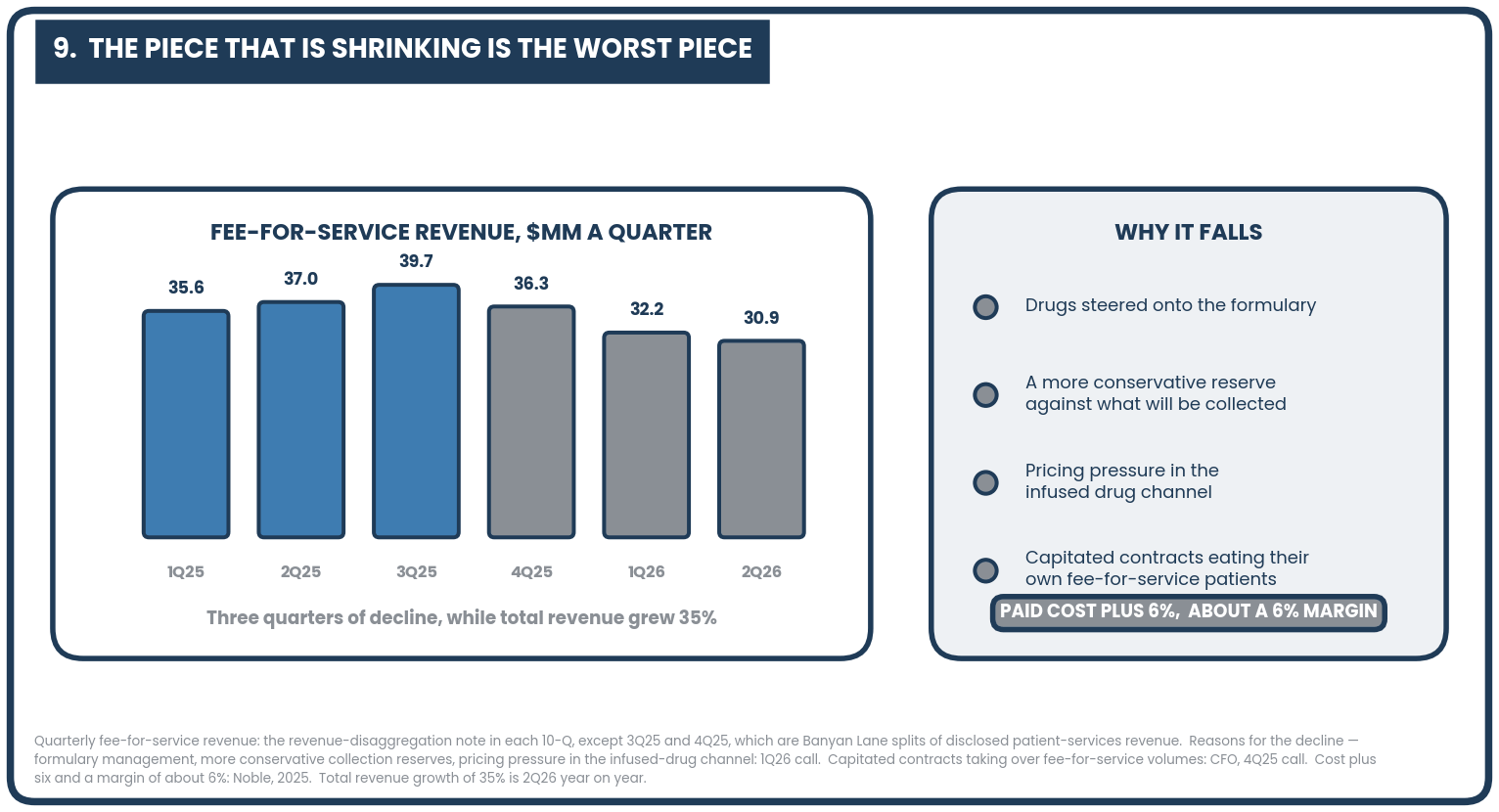
Model it falling 6% a year from 2027, capitated contracts eating their own FFS patients, a transfer from a 6% line to one carrying 15–30%
10. Underappreciated SG&A leverage
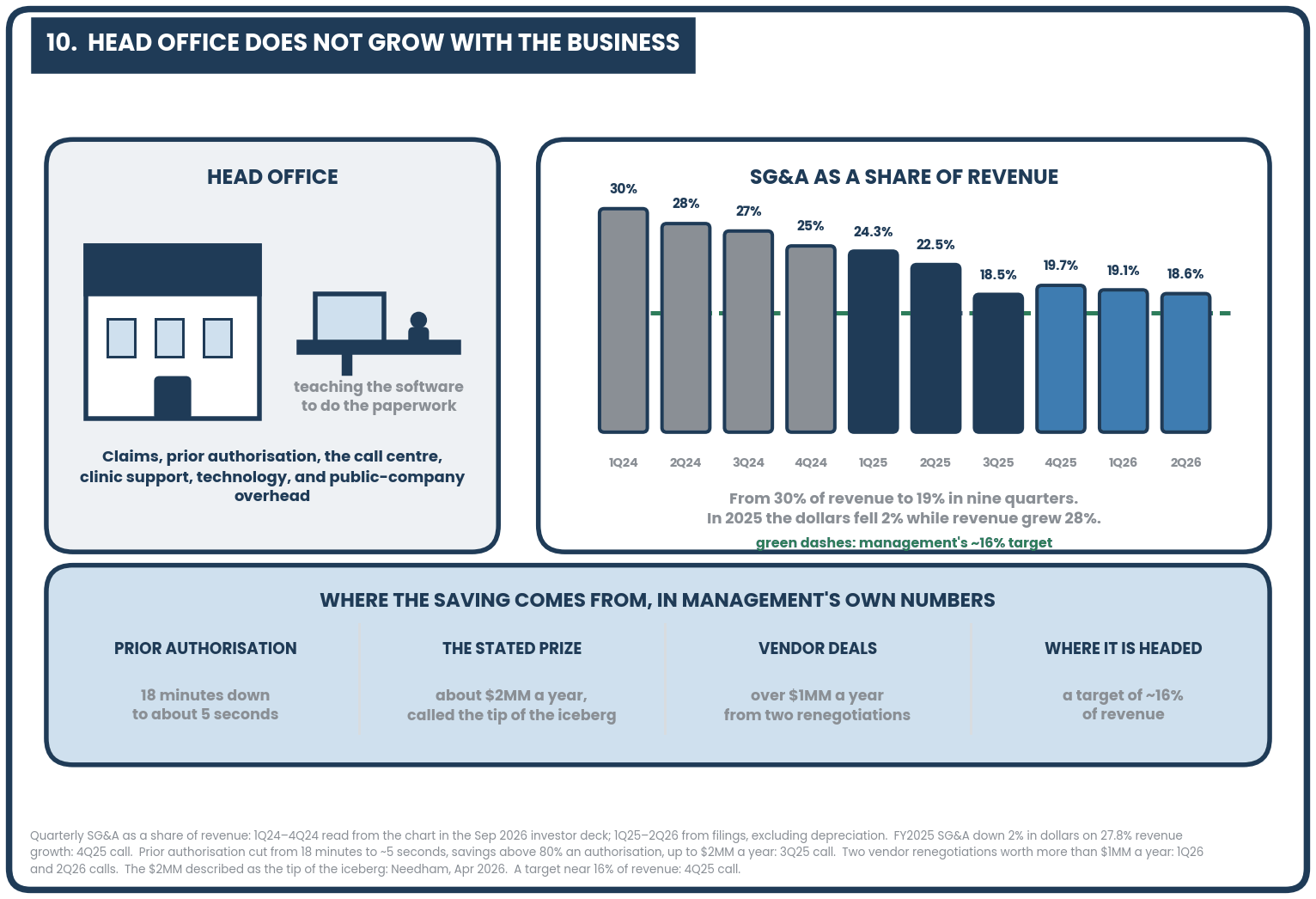
Read Management’s own words… they’re saying their own guidance is conservative… on nearly every metric…
Quotes from Q2’26 call Aug 6th and Wells Fargo Sep 8th… none of it is in our base case unless the plate says so
On 2027… “The combination of those is really what is driving our 2027 guide of 100% capitated revenue growth. Going from $150 million to $300 million of capitated revenue. The basis of that is those deals, which obviously represents a tremendous upside next year as there is additional deals in the pipeline as well.”
On how much is signed… “The majority of that has been announced to date, the vast majority of it... the bulk, again, of the $300 million is from the contracts already announced.”
On what was not forecast… “The exclusivity obtained this quarter in California was not part of the initial forecast nor was the 2 contracts, Oregon and Nevada.”
On the pipeline…. “Our pipeline is incredibly robust. The demand for our services has never been stronger.”
On pharmacy attachment… “When we launch these deals, there is always, 100% of the time, pharmacy attachment associated with that.”
On the network door… “Through the delegated networks and the networks that we are building, there is the potential for us to also add our network providers as well. Our new product, Starling Nexus, will aid in that. It is not something that we have guided to specifically, but it is certainly upside. Moderator: That would be all upside as you think about your financial model today. Carter: “100%. That’s right.”
On guidance excluding it… “Analyst: Still nothing assumed in the guidance in terms of any Part D lift related to the portal rollout, correct? Virnich: No, nothing.”
On the pharmacy beating plan… “Our Specialty Pharmacy segment this year continues to surpass our own expectations.” “Our Part D business is continuing to set monthly fill records.”
On the loss ratio... “On the delegated product, we’re looking at MLR between 75% to 85% once fully ramped.”
On SG&A… “What does it take to keep the lights on at Starling? Quite frankly, it’s quite minimal.”
On the market… “We exist in an industry that spends over $300 billion a year. We’re currently in five states, and frankly, under-penetrated in those five states. The ability for this business to grow is really unlimited.”
On what comes next… “Ancillary services that we can extend to our now network of providers that is 300+ in head count, as well as the ability to capture the massive amount of drug procurement we’re doing and lateralize that into other specialties over time.”
On scale... “This is a business that will be a multi-billion dollar platform soon, I’m sure of that.”
On how they win... “It’s really been more about winning business from competitors than consolidation per se... service and price seem to be the way we’re winning in other markets, too.”
Below the paywall you’ll find a breakdown of KPIs to financials to price targets, as well as 8 discrete sources of upside to guidance/consensus quantified. Without giving away too much, the market is just starting to catch on to the income statement turnaround that is set to take place in the next 12-24 months. However, the cash flow and balance sheet transformation the market will be forced to price once it understands where margins can go will allow true platform valuation… there is massive strategic value to be unlocked with a bit more scale and once they are flush with cash.
